
The challenge
BAE Systems develops and supports advanced defence, aerospace, and security capabilities. Its Canadian operations relied on an on-premises Microsoft Exchange 2016 environment for essential messaging functions, from mailbox administration to application integrations. With Exchange Server 2016 reaching the end of its support lifecycle, moving to a supported platform became a priority.
The goal was a modernization, not a move to Microsoft 365: BAE Systems needed to retain its on-premises messaging model while moving to a supported Exchange platform, preserving the established service identity and the workflows employees, applications, and devices relied on. Mail flow, certificates, directory readiness, client connectivity, backup procedures, and rollback options all had to be understood before production data moved.
Our approach
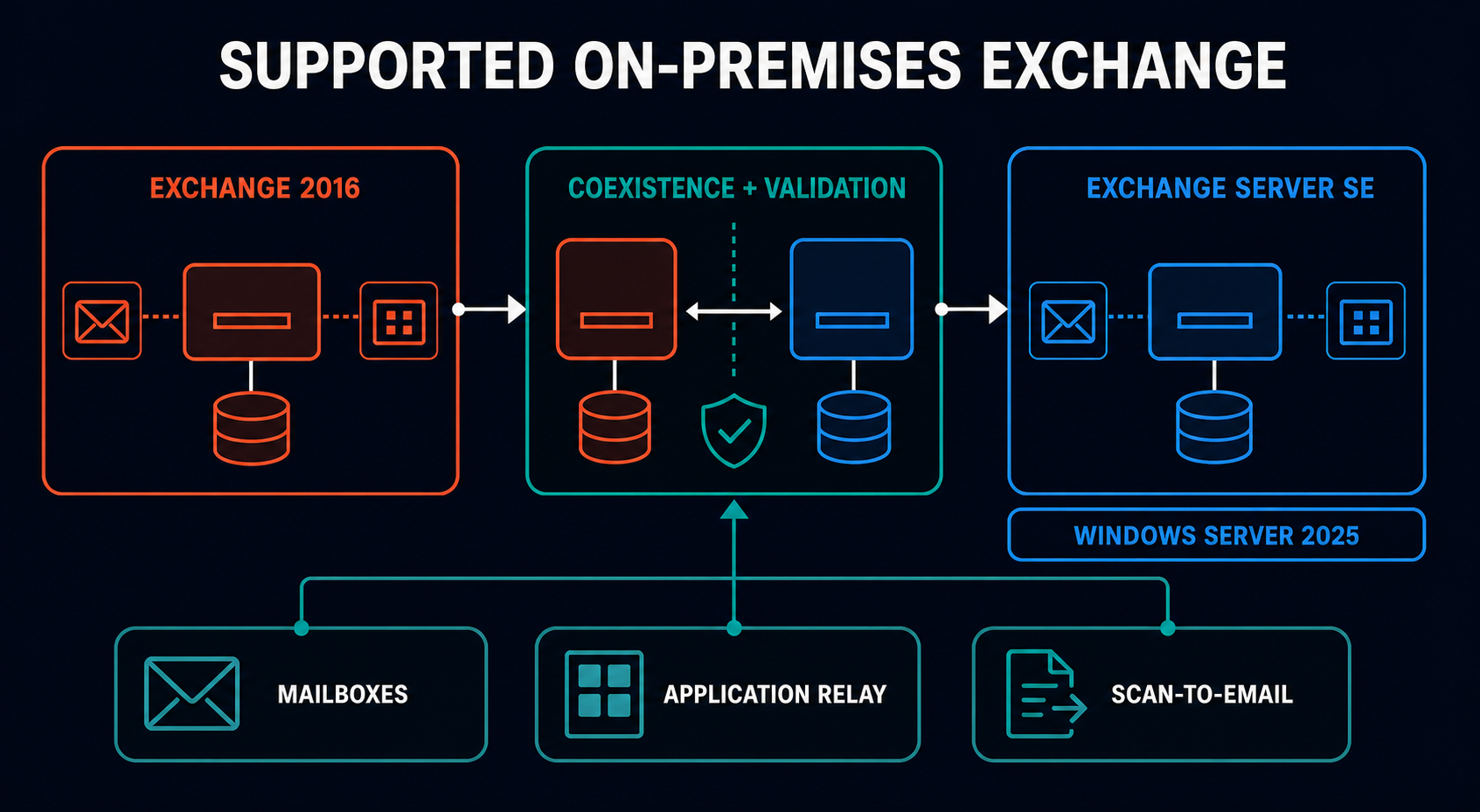
BITSUMMIT used a validation-led migration plan that moved from assessment through coexistence, migration, cutover, and handover - each stage reducing uncertainty before the next production change.
Assess the existing Exchange environment
The engagement began with an environment readiness review. BITSUMMIT examined the Exchange configuration and health, then documented the mail-flow connectors, accepted domains, Autodiscover settings, service dependencies, certificate bindings, and directory requirements that shaped the migration. The team also established backup, recovery, and rollback procedures for directory preparation, mailbox moves, and the final cutover.
Build and harden the supported platform
BITSUMMIT prepared Windows Server 2025 with the required roles and features, then deployed Exchange Server Subscription Edition with the applicable product and security updates. Certificates, service bindings, directory permissions, health checks, transport logging, and application logging were configured for the new environment, with security baseline work completed before production migration.
Prove coexistence before moving data
The legacy and new Exchange environments operated in coexistence while the team tested inbound, outbound, and internal mail flow. Validation also covered authentication, Autodiscover, client access, application relay, and scan-to-email paths, because applications and multifunction devices depended on Exchange for message delivery.
Migrate in stages, then cut over
Mailboxes were moved in structured waves rather than through a single high-risk change, with permissions, quotas, retention policies, and transport rules reconciled as the migration progressed. After migration and coexistence testing were complete, BITSUMMIT performed the production cutover, validated the environment through a post-cutover period, and decommissioned the legacy platform using the appropriate removal sequence. Updated configuration records, operational documentation, and administrator knowledge transfer completed the handover.
The outcome
BAE Systems completed its transition to a supported on-premises Exchange Server Subscription Edition platform on Windows Server 2025. Mailboxes and dependent services moved in structured waves, operations were validated across mail flow, authentication, client access, and integration paths, and the legacy environment was retired after cutover.
The organization kept its established service identity and on-premises operating model, backed by documented configuration, recovery planning, operational runbooks, and administrator knowledge transfer. Written client feedback described the project documentation as thorough and precise, and highlighted the consistent support provided throughout.

.webp)