AI Is No Longer a ‘Tool.’ It Is an Org Function. Here’s What 2025 Really Exposed.
In 2025 AI moved from pilots into core workflows, making governance, ROI, and ownership mandatory. Why AI is now an org function, and how to build it right.

As I’m watching the snow pile up outside my window and sipping coffee that’s already gone cold, one thing is painfully clear: AI stopped being a “tool” the moment organizations tried to use it like one. And 2025 didn’t just hint at this shift, it slammed the door on the old way of working.
There was a brief era where AI felt harmless enough to experiment with pilots, workshops, a few Copilot licenses sprinkled around like corporate confetti. No commitments. No stakes. No accountability. That era is gone, buried under the same snow I’m looking at right now.
2025 Was the Moment AI Moved Into the Core Workflow
The shift wasn’t about model upgrades; it was about behavior. Teams stopped using AI at the tail end of tasks and started expecting it at the starting line. Instead of “fix this draft,” it became “make sense of this intake,” “give me a usable first pass,” “show me what’s missing before I trip over it,” and “pull the scattered bits of internal knowledge into something people can act on.” AI became the opening move, not the bonus round, whether teams were ready for that or not.
.png)
Governance Stopped Being Optional
At some point leaders had to face a brutal reality: “We trust our people” is not an AI policy. I’ve seen sensitive financials, client data, and internal plans shoved into public models with a shrug. Relying on luck is not governance. 2025 forced organizations to define what data can be used, which systems are safe to connect, who approves new use cases, which outputs require human review, and how prompts and decisions are logged for audits. The companies that moved fastest weren’t reckless; they were structured early. Governance stopped being a brake and became the seatbelt that actually lets you accelerate.
ROI Finally Became a Metric, Not a Feeling
For most of 2023 and 2024, AI value lived in vague statements: “It feels faster,” “It seems helpful,” “It’s saving time somewhere.” In 2025, leaders finally demanded receipts. Baselines were set. Usage analytics became standard. Cycle times, error rates, throughput, and handoffs were measured instead of guessed. AI stopped being impressive for its ability to generate content and became impressive for its ability to measurably improve how work moves. Enthusiasm no longer counted. Outcomes did.
AI Quietly Became an Org Function
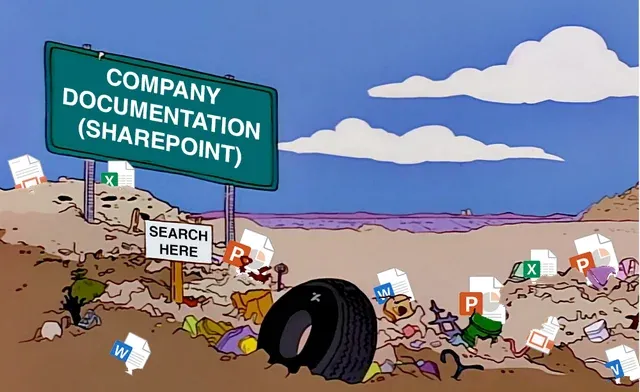
Once AI integrates into workflow, governance, and measurement, someone has to own it, and the old “IT will handle it” narrative collapsed. A real internal muscle emerged: program-office-style orchestration, operational AI champions driving adoption, AI literacy becoming a baseline skill, and governance acting like a shared operating language rather than a forgotten document in SharePoint. The smartest organizations treated AI like an operating model upgrade; everyone else treated it like a Chrome extension. The results showed.
.png)
What Organizations Consistently Misread
2025 exposed the patterns that simply don’t work anymore: endless pilots with nothing operationalized, obsession with outputs instead of outcomes, license buying without an adoption plan, no baselines, no metrics, no accountability, and the classic “people will figure it out.” They didn’t. AI doesn’t scale on enthusiasm. It scales on structure.
The Maturity Gap Everyone Underestimates
Most organizations believe they’re ahead of where they actually are. Running pilots does not equal maturity. Talking about governance does not mean you’re ready. Promising metrics “later” is the same as admitting you don’t have any. You can’t measure impact without standardizing the work. You can’t claim adoption when workflows depend on improvisation. You can’t scale when everything relies on luck. The gap isn’t technical, it’s operational discipline, and it shows up everywhere.
The Real Lesson of 2025
AI isn’t the strategy. Execution is. Tools don’t clear operational debt. Integration does. Governance does. Training does. Measurement does. AI is no longer an add-on; it is an organizational function. And the companies that rise in 2026 will be the ones that build it like one, with clarity, guardrails, and intent, not vibes and wishful thinking.
If you’re building your 2026 AI roadmap and want a grounded, unfiltered perspective, reach out to BITSUMMIT. We’ll pressure-test your assumptions, map what’s real, and help you move from pilots to operational impact without letting AI become yet another stalled initiative.
My coffee’s finished, the snow’s still coming down, and 2026 is already looking like a year where organizational excuses finally run out.

Subscribe for the field notes
Join our community of 100+ IT professionals and get tech tips and BITSUMMIT updates once a month.

Follow our social media channels; we are a supportive community sharing meaningful content.